
Trending

Plenty of advisors and investors are already discussing gold and likely not in a positive light because to put it candidly, the commodity is one of this year’ most disappointing assets.
In a winner-to-loser scenario, gold was one of last year’s best-performing assets, but it’s being taken to task this year. On the surface, the 4.3% year-to-date loss (as of July 22) sported by the SPDR Gold Shares (GLD), the oldest and largest gold-backed ETF, doesn’t sound that bad, but that data point belies bullion’s weakness since the war in Iran started.
The conflict touched off on Feb. 28 and since March 2, the first trading day after the start of the war, through July 22, GLD tumbled 22.6% with volatility that was nearly 1,300 basis points in excess of the S&P 500. Said another way, the yellow metal has very much betrayed its safe-haven reputation, underscoring why professional traders have dialed back long exposure.
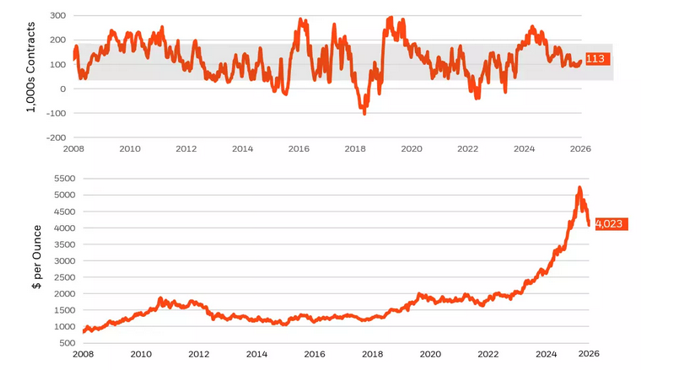
(Chart courtesy: BlackRock)
So it’s understandable that advisors and clients are frustrated with gold today, but history indicates ignoring the commodity during its dark days usually doesn’t pay off in the long run.
Gold Headwinds Credible, But Not Permanent
Indeed, the war in Iran goes a long way toward explaining gold’s 2026 woes because the conflict is stirring dollar strength while turning gold into an interest rate story – neither of which are positive for the commodity.
“As the dollar has risen, so have long-term interest rates, especially real or inflation adjusted rates,” according to BlackRock. “Real 10-year yields, derived from the TIPS market, have gone from around 1.65% in early March to 2.20% today. This shift in the rate regime has been another obstacle for gold. As an asset with no cash flow, gold returns are typically lower when real interest rates are higher.”
The other issue hamstringing gold is that it’s not a glitzy growth stock. As so many critics have noted over time, gold offers no earnings, suggesting that coupled with the conflict in Iran, have impetus to part ways with bullion.
“Even within the stock market, performance has increasingly been driven by an increasingly small set of AI companies experiencing outsized earnings growth,” adds BlackRock. “As an asset with no earnings, investors are treating gold the same way they’re treating slow growth, stable companies, by basically ignoring it.”
A Little Gold Is Still Worth It
Bad news aside – and much of it is baked into current gold prices – small allocations to the commodity are still worth considering. After all, advisors and investors entering the gold arena today are doing so prices that are significantly more attractive than what was available just six months ago.
Additionally, gold remains a prime diversification tool because even with all of this year’s haranguing, its correlations to equities and fixed income remain low. For risk-tolerant investors considering the commodity over the near-term, patience will be required, but gold still merits a small place in diversified, long-term portfolios.
“Short of a reversal in rates and/or the dollar there is no obvious catalyst for a quick rebound in gold. During the recent war in the Middle East, investors looked past gold’s traditional role as a geopolitical hedge,” concludes BlackRock. “That said, the structural reasons to hold gold remain intact. Debt and deficits remain at historic levels, debasement remains a long-term risk and while gold did not work in March, geopolitics have not become any more stable. All of which still argues for maintaining a modest gold position in portfolios.”
Related: The Biggest Risks Facing Investors in the Second Half of 2026