
Trending

I hopped carefully across the sand, taking care not to spill my drink, and lowered myself into my beach chair before propping up my rolled right ankle under some ice. Rolling that ankle right before my wife and I left for vacation was unfortunate, but as a veteran of an ACL tear, cartilage damage in both knees, and a previously rolled ankle, I felt I was handling this latest injury with skill and aplomb.
I raised my frosty beverage to my lips for a celebratory sip, but I also caught an even frostier look from my wife. Because, as with those previous injuries, this latest ankle roll was self-inflicted from my mid-50s basketball playing.
For 25 years, I had played in a number of rotating basketball games with other dads at my local gym. As time rolled on, so did the joint rolls, sprains, and ultimately a tear. With each injury, my wife urged me to consider giving up my amateur basketball career: for my “health,” for “the kids,” and for her because she had to “pick up the slack” whenever I was hobbled. That included now with this latest injury, because she had to drive everywhere with my right foot too injured to work the gas and the brake pedals.
“Tom, that’s enough of this basketball stuff,” she said on the beach. “Please promise me you’ll stop.”
It was a reasonable request. After all, I am in the business of understanding, accepting, and planning for the inevitable realities of aging. I know that as much as I love playing basketball, I eventually have to hang up my sneakers.
So how did I respond to this request from my wife? By firing up the Amazon app on my phone and ordering a brand new pair of my favorite LeBron 13 sneakers right from the beach to be delivered when we returned. Delivered to my office address to avoid another frosty glare.
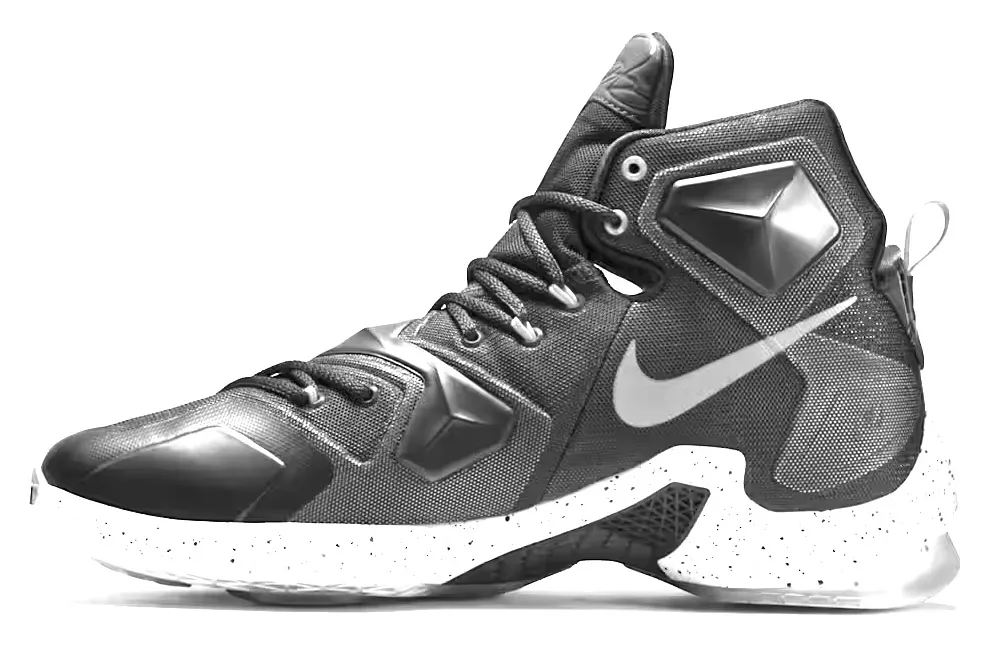
Shoes for the player I used to be.
The joke was on me, however. I needed the rest of the year to heal up and get back into shape. I put them on a few times while recovering to keep myself game-ready. Ultimately, however, they never made it to the court. They sat in the box for two years, mocking me. I ended up giving them to a friend to give to his kid who was all about the Sneaker Collection lifestyle and whose ankles were not worn from not accepting the limits of age.
“The root of suffering is attachment” – Buddhist teaching
I’ve thought about those dumb shoes a number of times. The time, the money, the waste, the ridiculousness. Easy conclusions rotate around some sad version of me deluding myself that “I’ve still got it” mashed up with my feeling younger than I am. Neither of those is very interesting in my mind.
Slightly more interesting is the relationship between hopeful and fanciful versions of our present and future selves. While on an adolescent level (never that far away), I still saw myself as (relatively) athletically competitive, and I didn’t want to deal with reality. My, my ordering of the shoes had more to do with my attachment to the community of friends and acquaintances on the court.
In Your Future Self, Hal Hershfield proposes that we should not have only one future identity; instead, we should think about tomorrow encompassing a number of distinct possible selves. If that’s the case, it follows that these discreet future selves would have discreet social circles.
While common sense and the ortho bills forced me to give up my sneakers, I also knew I was giving up the social connection to that group that regularly gathered for a shared purpose that I’d enjoyed since I was a kid.
The LeBrons represented 15-25 casual friends that I’d lose touch with, those dads and others who I played with. Dr. Robin Dunbar’s famous 1992 study posited that we can only maintain around 150 casual friendships at a time, and further study on the concept remains intriguing. I believe Dunbar’s general point is right, which means my involuntary basketball retirement decreased the number of my regular pals by 10% or more. Ouch.
I’ve found in my 50s that I’m energized by the prospect of deliberately cultivating community in my life. We naturally lose social contacts and communities as we age. But as a 55-year-old extrovert, I’ve thankfully been able to mitigate lost relationships in my circle through new casual friends from work ventures, travel, and persistent bad golf. However, that doesn’t mean the losses don’t hurt.
My wife and I together have noticed a turnover in friendships with parents who were raising parallel kids. Once the empty nest set in, many peer parents predictably scattered all over the place. Even if expected and normal, it’s a little sad. Putting Basketball Me firmly in the rearview mirror meant saying goodbye to a community I really cared about–and maybe makes my sneaky sneaker purchase a little more forgivable.
Filling the void with stuff our future selves are never going to use
Thinking decades forward is a totally different thing, however. When we think about getting older, we have to face the decreasing amount of time left to replace lost friendships. We know about loneliness and how it quietly devastates people. Loneliness is correlated with aging and a recognized public health risk. It’s also linked to depression and dementia.
One way we address that is acquiring stuff: material goods, hobbies, other things that we use to fill that void. The LeBrons were just the tip of the junk iceberg that I have acquired, especially post-Covid. There is a giant pile of not-quite-garbage that simply needs to go. I’ll get to it when I get to it, probably in a frenzy of Marie Kondo-like spring cleaning. Hopefully, I’ll keep the joyful stuff. Tomorrow’s problem.
There are also the possessions that possess us to do things we won’t follow through with. One example is the toy car carved by my grandfather. It’s a possession I do cherish because it inspires welcome nostalgia and memories of him.
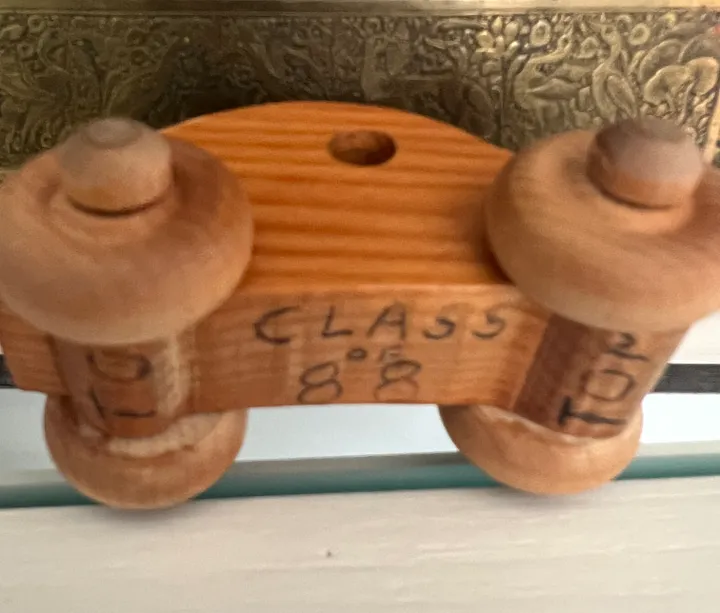

It also triggered purchases of woodworking stuff for a Grandpa-inspired hobby that I’ll never get around to. Woodworking Me needs to join Future Basketball Me in the graveyard of foregone possibilities.
The versions of myself that I want to keep alive are a matter of the choices I make now.
So here’s the Buddha addendum to my inventory management principle. If some item in my pile of stuff is a thing that doesn't align with a version of Future Me I’d like to keep around, out it goes.
My lesson from the LeBrons: stop looking backwards. I only have so much runway left. I’m trying to look ahead to my friends and family of today and tomorrow, maybe even through the imaginary eyes of a Future Me. I know connection will be a guiding principle. That can seem like a tall order. But connection can keep us aging gracefully instead of hobbling on a beach from avoidable injuries and filling that void with things we’re never, ever, going to use.
Future Me is going to have his peeps. And he is packing light.
Related: Financial Wellness Is Watching You—and That’s Not Always a Bad Thing