
Trending

U.S. stocks finished the holiday-shortened week lower but found some optimism on Friday as a four-day losing streak ended. The week was dominated by discouraging news of escalation in the Middle East, which pushed oil prices higher and contributed to rising Treasury yields.
Oil briefly crossed $100 a barrel as the Iran conflict drags on and worsens future inflation expectations. Attacks on Saudi energy infrastructure and continued hostilities from both Iran and the Houthis in Yemen deepened concerns about dwindling energy supplies and usable shipping routes.
The 10-year Treasury yield climbed to about 4.97%, and the two-year yield rose above 4.63%. Heavy Treasury issuance and a smaller-than-expected Treasury buyback announcement added to the pressure on bonds.
In the stock market, the Russell 2000 and the S&P MidCap 400 took the worst beatings, declining by 2.41% and 1.87%, respectively. The S&P and the Nasdaq Composite fared far better, losing less than 1% during the week.
Inflation progress is too little, too late
Thursday’s producer-price data showed headline PPI rising 0.4% in August and back above 5% on an annual basis. Energy prices jumped 4.2% from July to August. Friday’s CPI report gave Fed policymakers another reason to be on edge.
Headline inflation jumped from a 0.1% month-over-month change in July to 0.4% in August, mainly on higher energy prices. Despite the monthly jump, the annual rate of change was steady at 3.4% year-over-year, the same as July. Rising oil prices telegraphed the jump in headline inflation, so the hotter-than-expected monthly core CPI data was a surprise. Core CPI rose 0.3% since July (0.2% expected), which marked the hottest monthly results since April. The annual core CPI measure eased to 2.4%, but I wouldn’t expect it to keep moving in that direction.
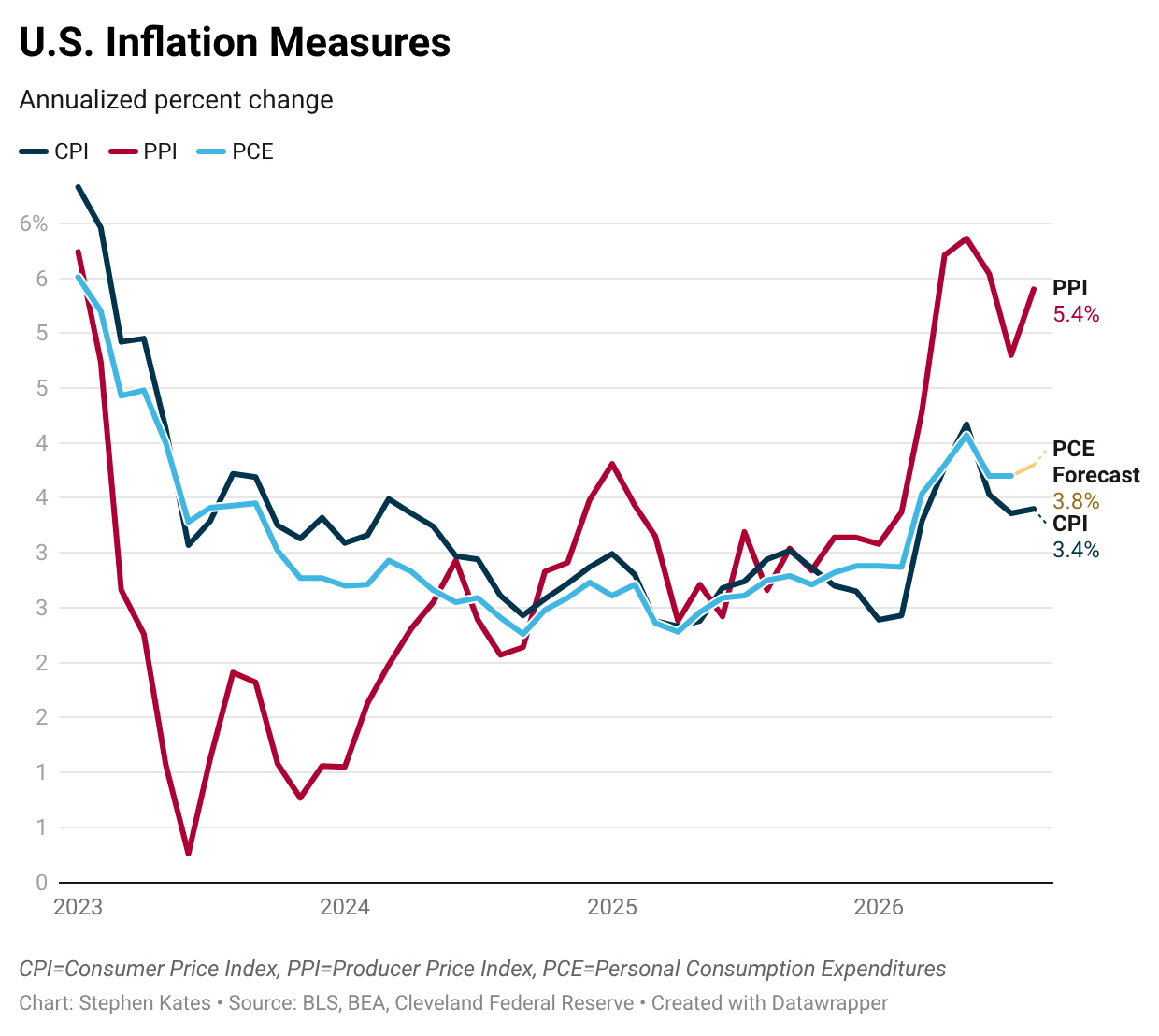
The details were also mixed. Core goods prices rose just 0.1%, but core services accelerated. Cost pressures were broad-based, impacting wireless plans, airfares, hotels, and education costs. Falling medical care and motor vehicle insurance costs provided light relief. The concern at this stage is that firmer services inflation suggests inflation risks are escaping their enclosure.
Earlier in the year, the energy spike could be looked through given the expectations at the time that the Iran conflict could be short-lived. The resurgence of energy costs amid escalating attacks on key Middle East infrastructure and shipping routes makes it more likely that higher prices will broaden further rather than fade away.
The labor market, meanwhile, is still giving the Fed room to focus on inflation. Initial jobless claims remained low at 206K, while continuing claims were little changed.
Consumer sentiment this week was less encouraging. The University of Michigan published the worst sentiment and inflation expectations since May. Even Republicans are getting sour.
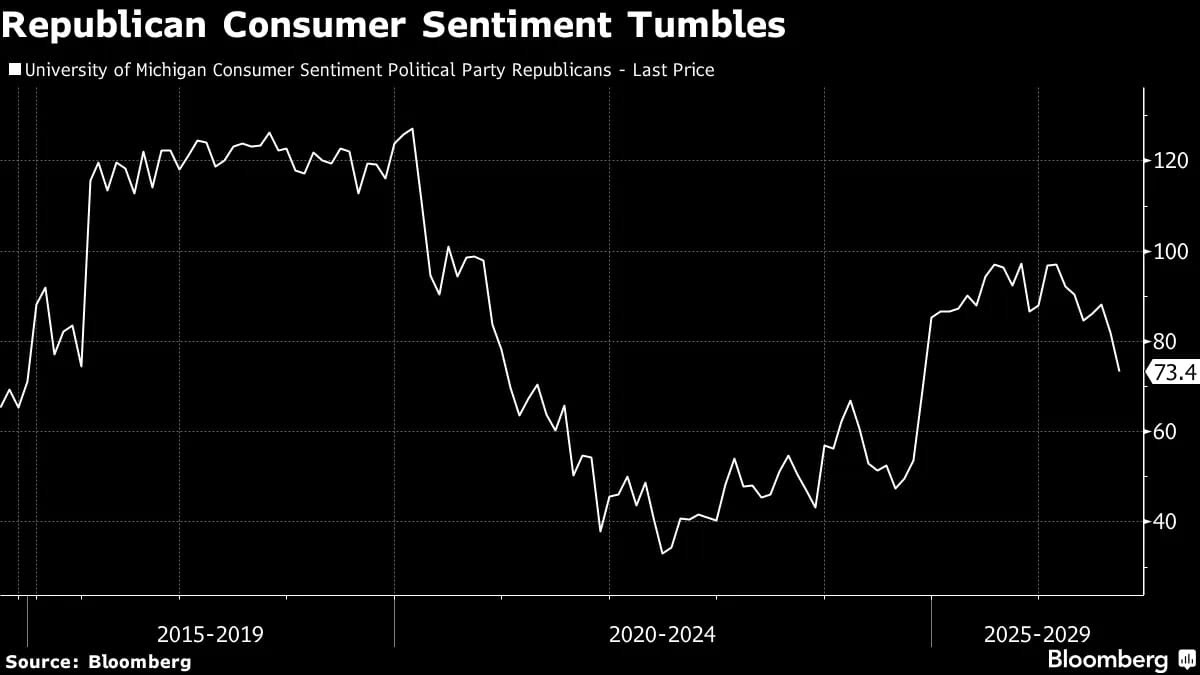
Source: Bloomberg via Daily Chartbook
Will the Fed hike? How much will the Fed hike?
Markets increasingly expect the Fed to act. The probability of a September rate hike rose to roughly 90%, one more step up in rising expectations over the last month. The mood has shifted so much that the question is whether the next hike will become the beginning of a prolonged tightening cycle or a single, limited adjustment.
Market odds favor several hikes over the next nine months, but the path forward is murky at best. The November midterm election will complicate the Fed’s job, regardless of the path it chooses, since any choice will be viewed through a political lens.
The gap between the two-year Treasury yield and the Fed Funds rate is roughly 0.9%, signaling that three or four quarter-point rate cuts are all that’s expected at a time when inflation runs close to the Fed Funds rate. That is far less dire than in 2022, when inflation was higher and rising, and the gap between the policy rate and the two-year was wider.
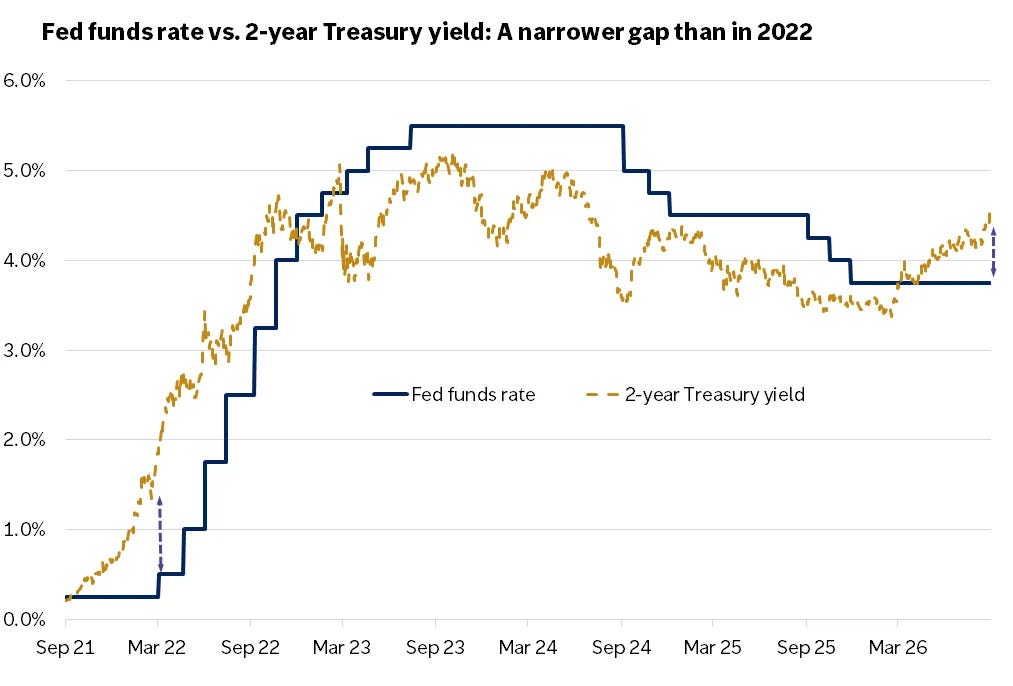
Source: Edward Jones
For investors, that creates a more complicated setup rather than a simple bearish signal, which may have contributed to Friday’s rally. Strong corporate earnings remain an important tailwind, with S&P 500 profits having grown substantially over the past two quarters and analysts expecting another 25%+ increase in the third quarter.
Traditionally defensive sectors such as Staples and Utilities remain soft, but there are plenty of winners in this environment if you look for them. Energy has strengthened as oil prices rose, and Technology, Communication Services, and Discretionary have upside even as they consolidate.
What this means for investors and what’s next
Next week’s FOMC meeting will be the main event, with investors focused not only on the rate decision but also on the Fed’s Summary of Economic Projections policy guidance. Kevin Warsh will have an even tougher time sticking to his press conference riddles with expectations so feverish.
Oil prices, Treasury yields, and the S&P 500’s 50-day moving average will remain important signals for market direction. Keep a close eye on where momentum leads and where ii fails. A decline in oil and yields could ease pressure and broaden the rally, while persistent energy inflation and rising yields will keep volatility elevated. With earnings still strong, the case for staying invested shouldn’t be challenged. That is still the clear choice. However, investors should plan for a wider range of outcomes.