
Trending

June Consumer Price Index Results
The June headline Consumer Price Index (CPI) fell by 0.4% from May, beating expectations of a 0.1% decline. On an annual basis, this resulted in a 3.5% increase from June 2025, 0.3 percentage points below the expected 3.8%.
Core inflation, which excludes food and energy, was unchanged for the month and eased to 2.6% year over year from 2.9% in May. That was a welcome surprise that points to broader improvement after the strong inflation readings in the spring.
Although both June headline and core CPI beat expectations, the measures remain well off target. Rising tensions in the Middle East slightly overshadow this report, given that oil prices are heading higher again and geopolitical tensions are bad for businesses and consumers.
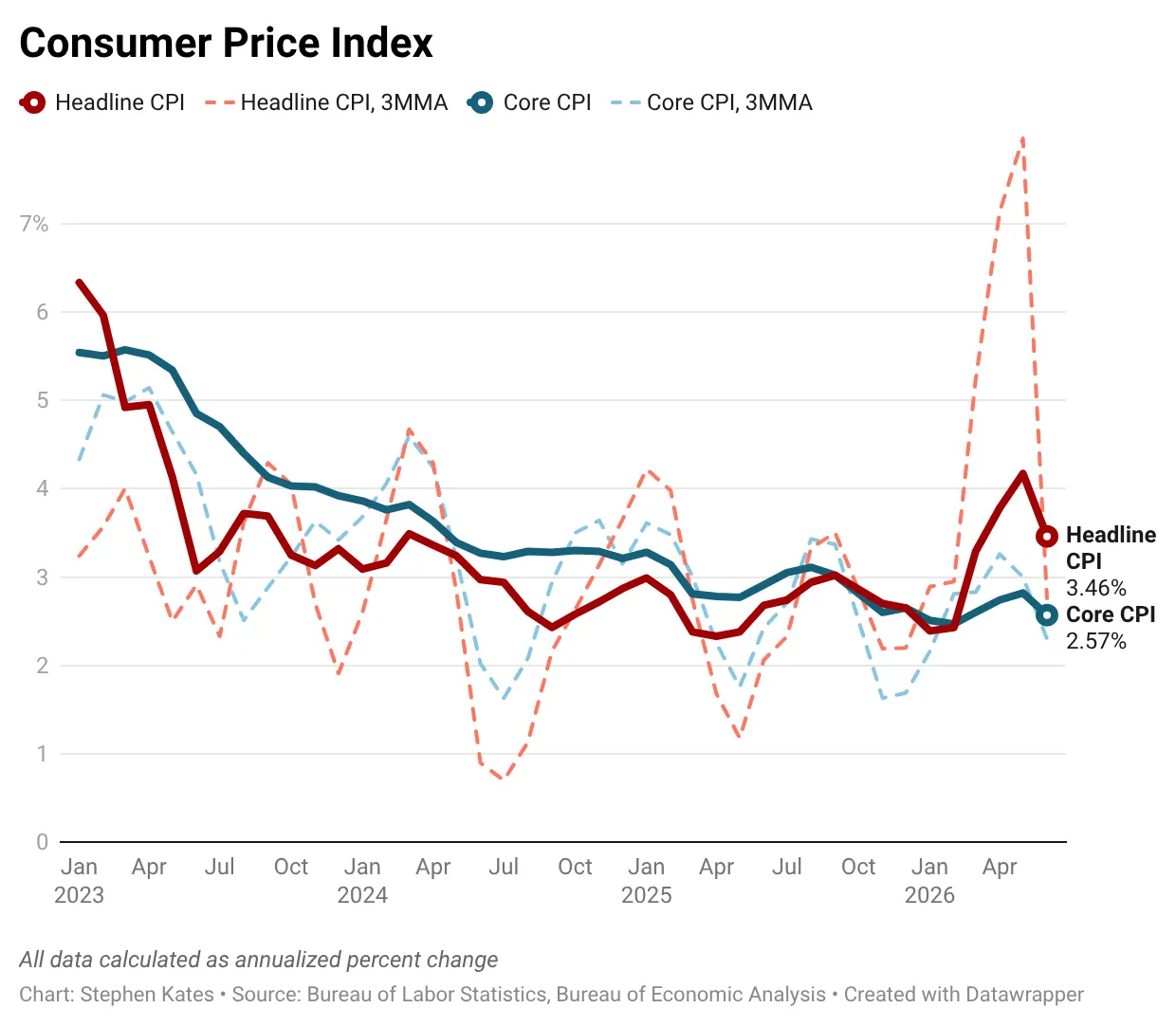
This morning’s positive inflation report is worth celebrating, but it hardly makes a trend. There are still a lot of issues that will make taming inflation difficult throughout the rest of the year.
Recent research from the New York Federal Reserve shows evidence that the inflation impact from tariffs is still working its way through the economy. Other macroeconomic trends, such as the AI infrastructure buildout and the conflict with Iran have added their own pressure on prices. Inflation is heading back down to earth as evidenced by this morning’s Consumer Price Index report, but it isn’t likely to move in a straight line.
The Gift that Keeps on Giving (Inflation)
While many businesses have already raised prices to offset higher import costs, nearly half of firms that have paid tariffs say they still expect to increase prices further, with some planning additional increases more than six months from now.
Based on the NY Fed’s data, manufacturers are quicker to pass on costs through price increases. More manufacturing businesses have either finished raising prices, or expect to do so within the next six months. Service businesses are slower to pass on their costs, or expect to pace their price increases more slowly.
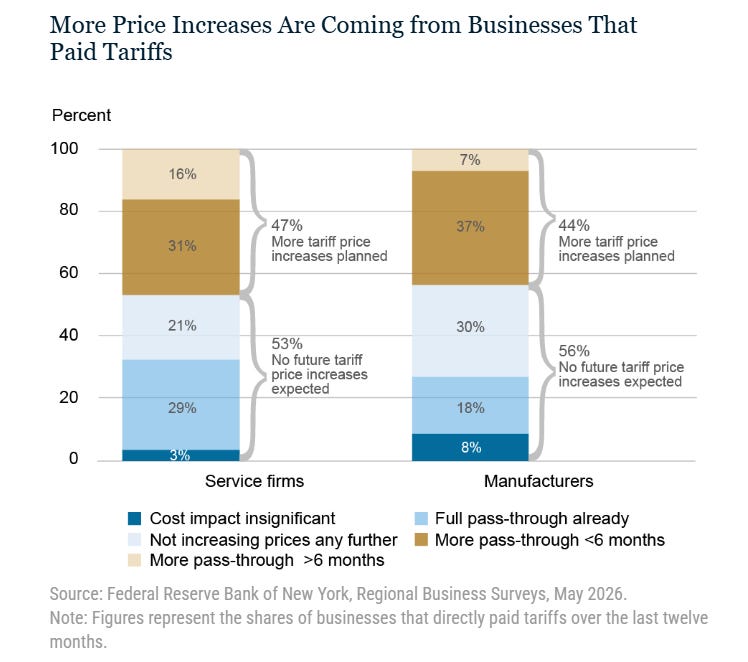
Inflation from tariffs is a slow drip, and it isn’t running out anytime soon. Some businesses are locked into contracts that prevent immediate price changes, while others intentionally spread price increases over time to avoid alienating customers. Both of these reasons are certainly in effect today. Rather than one large jump, many firms are choosing a series of smaller increases so the impact will linger throughout 2026 and beyond.
AI Stands for Also Inflationary
Apple and many other companies secured themselves exemptions from tariffs on various electronic components. Ultimately, that only delayed the cost increases for consumers. The pace of the AI race has caused a shortage in memory chips. A boon for memory chip makers is trickling down to consumers in the form of higher prices.
Apple announced price hikes on most of its products at the end of June. Apple has the brand and pricing power to make these new prices stick. Apple is likely the first of many that will make this move. Smaller competitors may not be able to pull off large price hikes and therefore they may eat the difference in costs, but over time, higher prices on components will translate into higher prices for consumers.
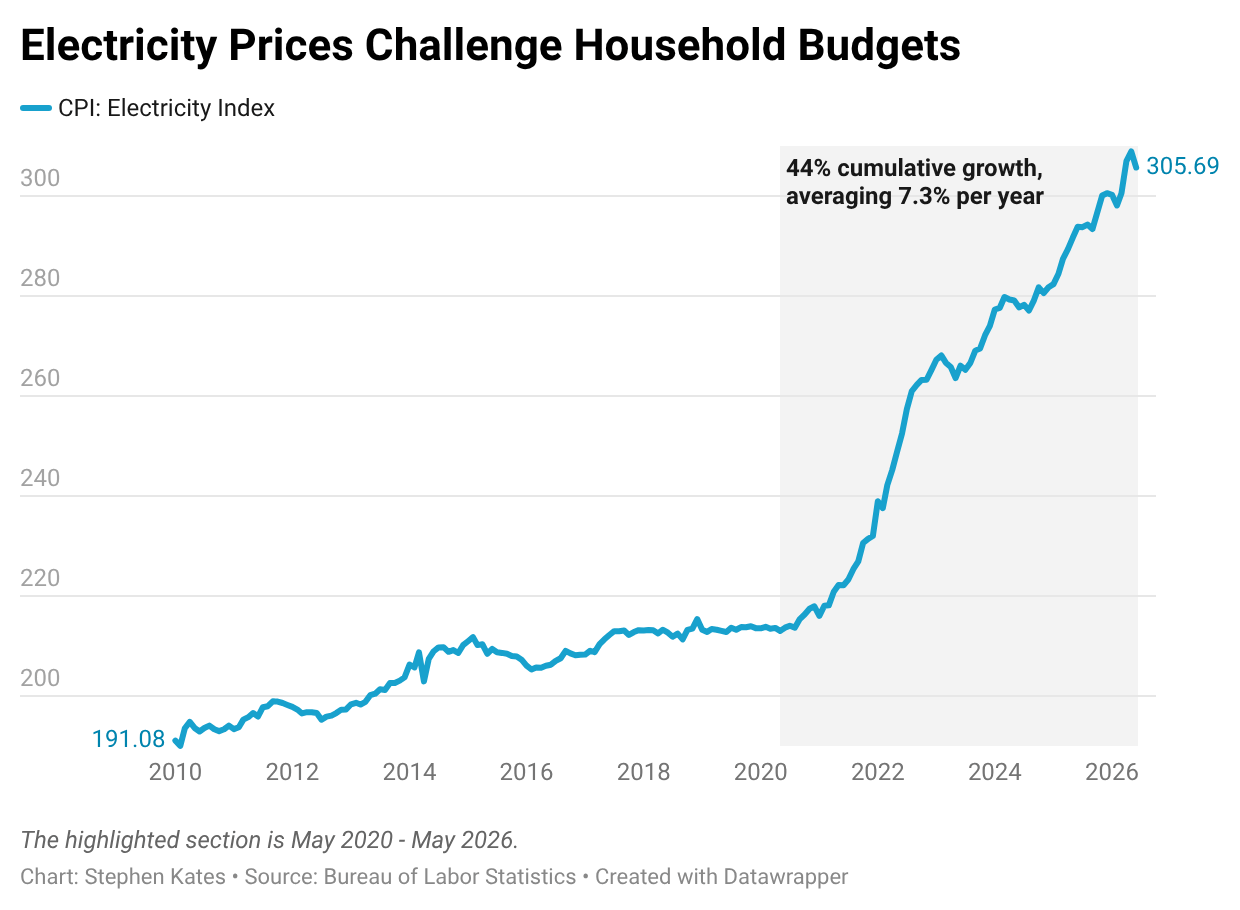
Similarly, higher electricity demand around datacenters is contributing to higher prices for US households. Many hyperscaler companies like Google and Microsoft are exploring their own power generation options, but until those come online, average Americans are competing for power with power-hungry businesses.
High Flying Prices
Airline business have been hit hard by the rapid increase in fuel prices following the conflict with Iran. Due to higher fuel prices, the average cost of fares has risen across nearly all major airlines. Spirit Airlines, unable to compete and already struggling, went bankrupt quickly. The rest of the airline industry is increasingly earning more from their premium cabins than the economy. As such, prices are likely to remain high.
Delta airlines in their most recent earnings report stated that even as fuel prices fall, they are unlikely to bring fare prices down. They intend instead to lean more heavily on premium cabins for earnings, while also offering more premium tiers that still command higher prices, but have more limited seating, scheduling, and amenities.
This is no surprise and mirrors the actions of airlines after the 2008 financial crisis. In an effort to combat higher fuel prices and buoy performance during the recession, checked bag fees were introduced. American Airlines started it, the rest followed, and they never went away.
Up and to the Right
Consumers have caught on or resigned themselves to the fact that higher inflation rates are here for the foreseeable future. Inflation expectations are elevated, and have been trending higher for months. This is one of the reasons the Federal Reserve has been talking tough about price stability.
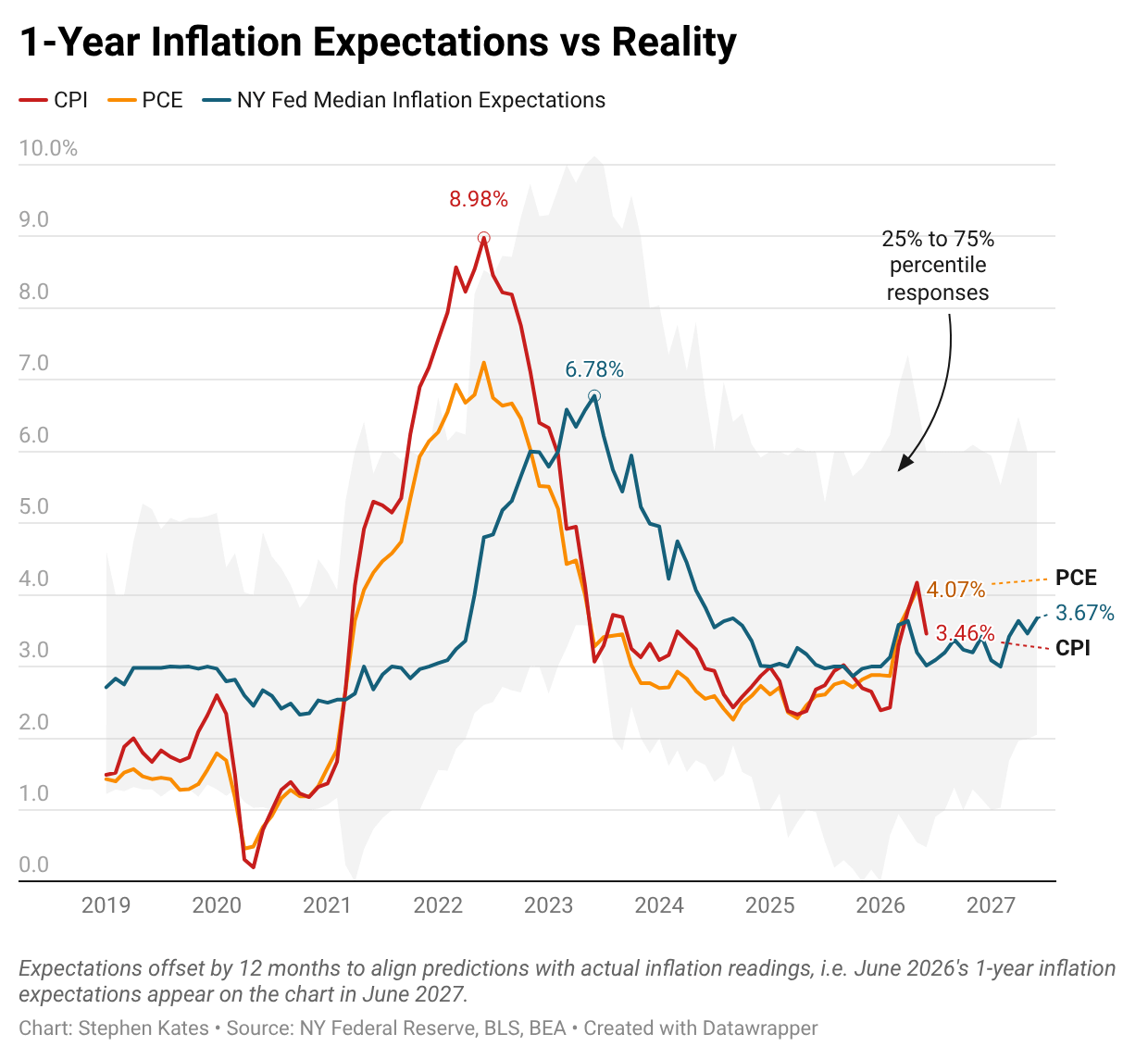
Opportunities to introduce fees or higher costs that can be cemented by pricing power leaves consumers permanently paying higher prices. Tariffs will continue to increase prices as businesses see opportunities to raise them in order to offset or recoup their costs.
Most companies can’t raise prices unless there is a consumer base willing to pay for it and that can take time. In the case of Apple, Delta, or electric utilities, they are companies that have steady demand that is relatively inelastic (unaffected by price). They can almost raise prices at will.
Related: Markets Keep Ignoring Bad News. Here’s What Investors Should Watch Instead