
Trending

Written by: Gavin McMahon
Has AI killed Storytelling?
Or did it make it required? You can draft a blog post over lunch. Auto-reply to an email or a comment. Even “write” a book in a weekend—if by "write" you mean ask ChatGPT.
According to one datapoint (mine—it took me seven years to write Story Business), that’s a 99.92% improvement.
Who wouldn’t want that? AI has killed the blank page. It filled the pipeline. It helps.
But more isn’t necessarily better. More is AI slop. Faster is an email to your boss. Three bullet points translated through GPT into a polished multi-paragraph item, and retranslated by your boss back into three bullet points.
Words are faster. Human comprehension isn’t.
This isn’t just about AI. It points to a broader condition—one you have likely battled for decades. Signal vs. noise.
This is what I call the blandscape.
And AI, for all its brilliance, makes it really, really easy to blend in.
In a brave new world of synthetic sameness, constant content, and infinite information, storytelling has become more important than ever.
Not just for marketers and communicators—the traditional pigeonholes of storytelling—but as an essential tool for every leader.
Because storytelling is how people make sense of things. And business—beneath the dashboards and KPIs—is just people making decisions. Decisions shaped by the one story that rises above the noise. The one that pulls us out of the blandscape and makes the strategy stick—in business, in leadership, in change.
Here’s a curated collection of storytelling articles I wrote in 2025—six moves that help you cut through:
#1. Stand out.
#2. Anchor to value.
#3. Invite the audience in.
#4. Say more with less.
#5. Create collision.
#6. Align the innovation engine.
#1. Stand out.
Steal distinctiveness from Escape the Blandscape.
Most business stories never rise beyond a list of features or a statement of ROI.
Escape the Blandscape shows why that fails. Stories start working when emotion enters the frame—when the customer becomes the hero, the villain is named, and the product steps back into the role of guide.
That’s how Tide broke through a Super Bowl full of beer ads. That’s why “Chat” beat “GPT.”
In a world of polished sameness, storytelling works when people have something to root for.

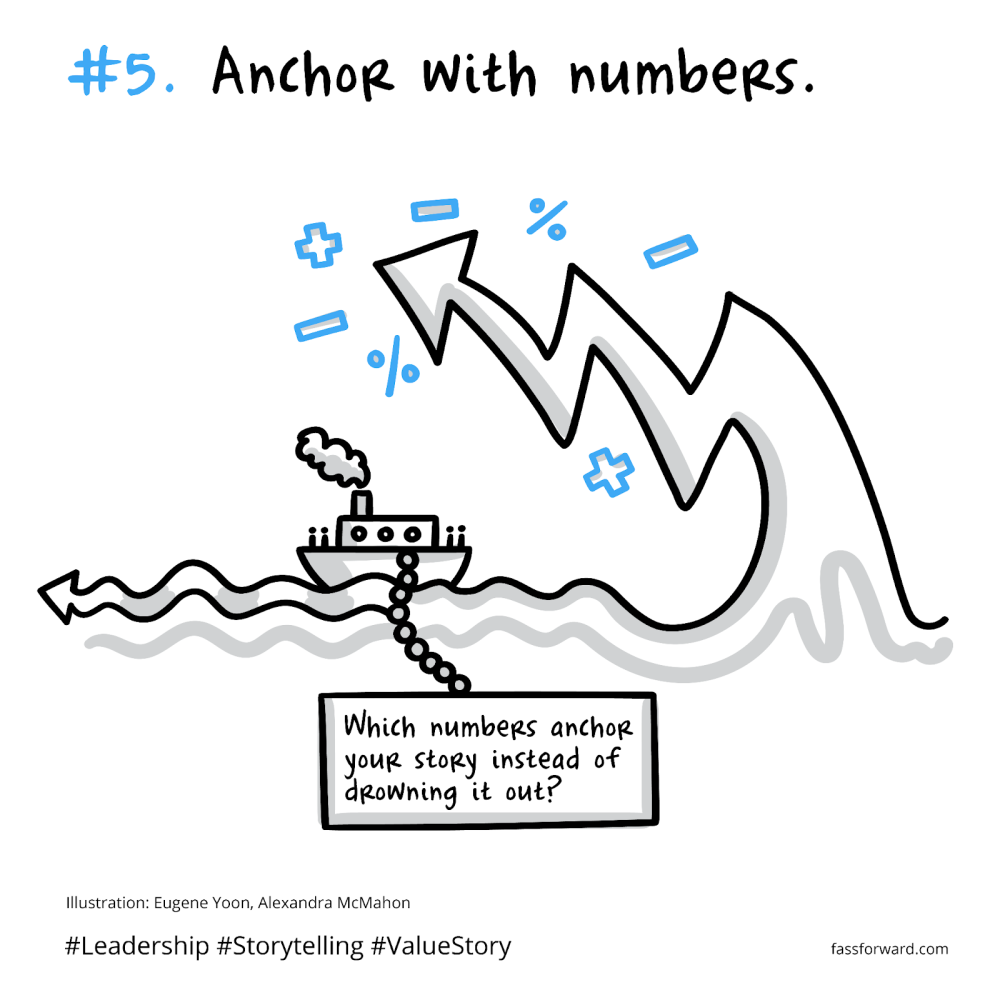
#2. Anchor to value.
Steal relevance from Are You Telling a Value Story?
Not all stories create value. Most simply decorate ideas.
Are You Telling a Value Story? makes a single point. Storytelling earns attention when it helps someone decide. Not later. Now.
The best stories don’t explain everything. They surface the problem. They clarify the choice.
In an age of infinite information, usefulness wins.
#3. Invite the audience in.
Steal co-creation from Choose Your Own Adventure
Belief forms faster when people participate.
Choose Your Own Adventure came from an over-the-weekend, AI-assisted attempt to turn Story Business into a game—one where the reader’s choices shape the path forward. Not watching the story. Moving it.
Why? Because when the audience is given action, the message stops feeling theoretical. They go from following to moving.
The story becomes lived.
In a world of endless content, storytelling stands out when it gives people agency instead of answers.

#4. Say more with less.
Steal precision from Lean Messaging
We don’t have an information problem. We have a clarity problem.
Lean Messaging shows why stories spread through compression. If people can’t remember it, repeat it, or reuse it, it won’t travel.
Short beats long. Sharp beats thorough.
In an ocean of content, stories survive by being light enough to carry.

#5 Create collision.
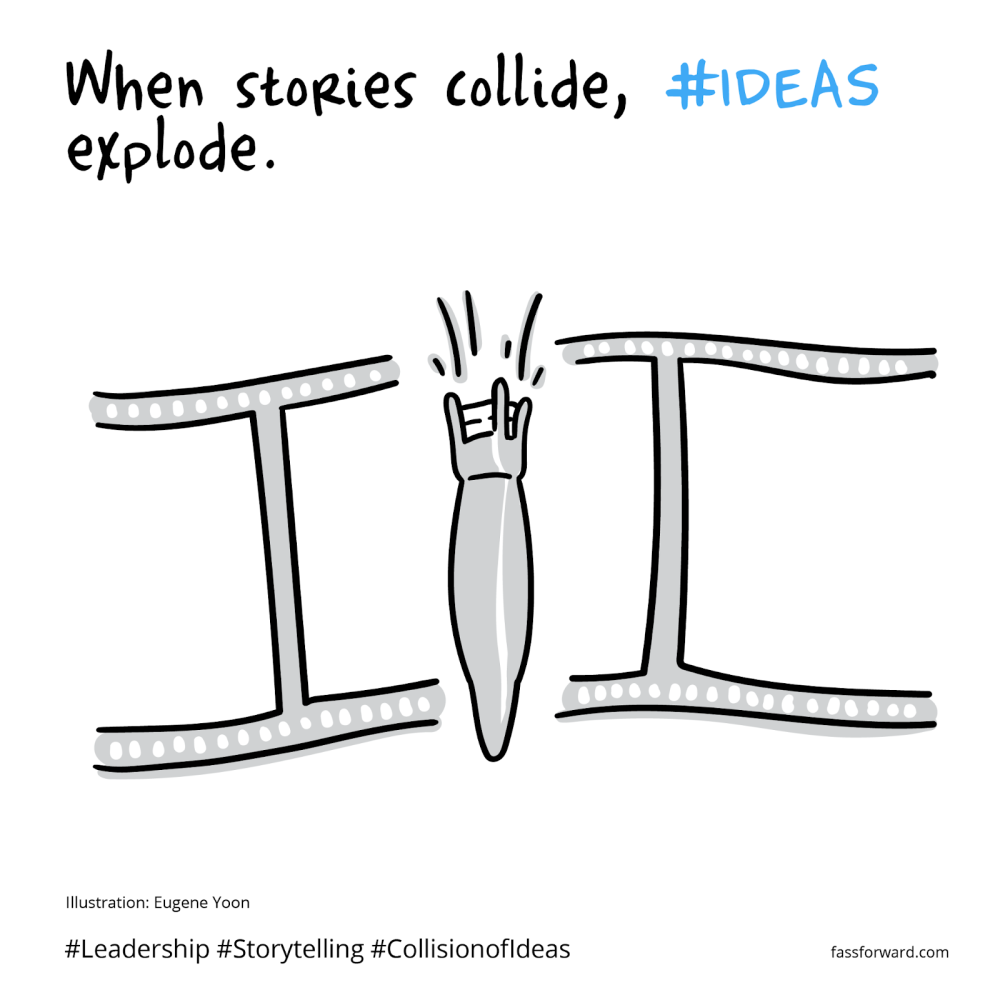
Steal originality from The Collision of Ideas
Original stories rarely come from pure invention. They come from collision.
The Collision of Ideas shows how meaning emerges when ideas from different worlds smash together—Disney animation and WWII warfare, metaphor and engineering, history and strategy.
Predictable inputs create predictable stories. Collision breaks the pattern.
That’s how storytelling escapes sameness.
#6. Align the innovation engine.
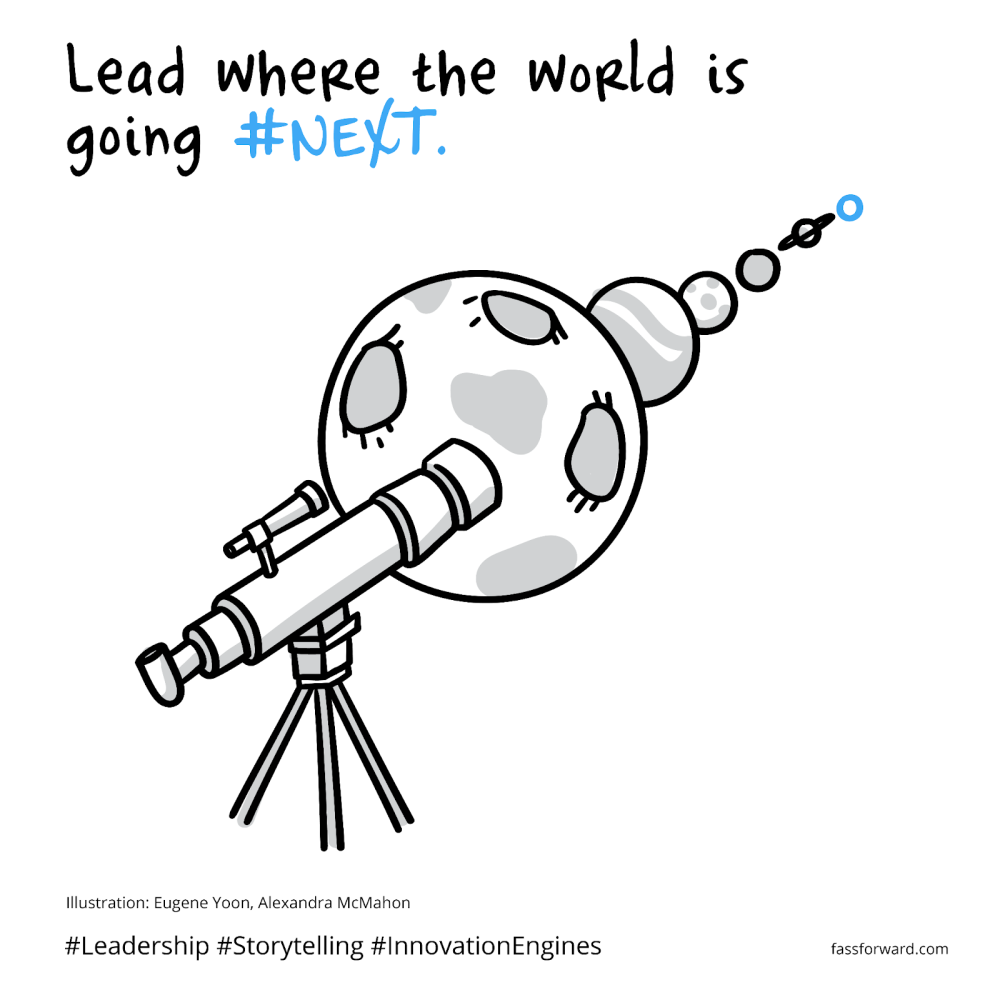
Steal meaningful change from Innovation Is… and Innovation Engines
When novelty is cheap and tools are everywhere, teams default to building. More features. More tech. More bets. Product, technology, customer, and future each pull in different directions.
Story is what aligns them. It turns scattered ideas into a coherent bet. Activity into direction.
In the blandscape, innovation doesn’t fail because it lacks ideas. It fails because it lacks a compelling story.
Looking to the future.
Tools will keep getting faster. Content will keep getting cheaper. AI will become better. Still, the tide of its slop will rise.
Storytelling is what turns it all into meaning.
Because businesses don’t run on content. They run on the stories people believe enough to act on.
Related: When AI Writes the Web, Millions of Users Are Left Out