
Trending

Written by: Tim Pierotti
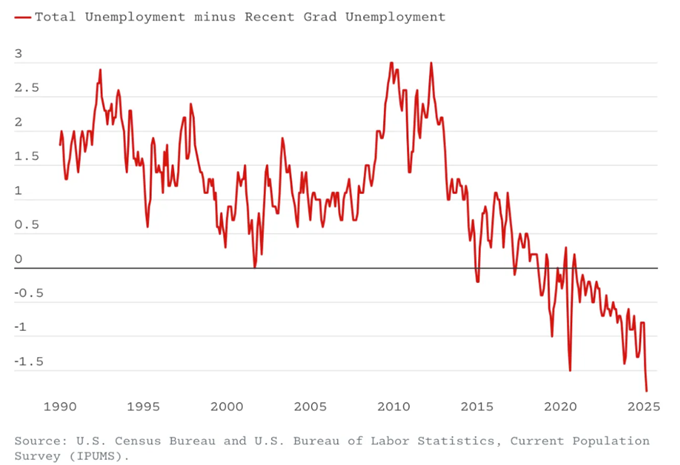
Source: Derek Thompson
Two things can be true: This is a terrible job market for recent graduates and many other segments of the white-collar job market and yet nearly 40% of employers can’t fill open roles. The macro data, in this case reflects what many of us have seen in our own lives. I have three examples from recent interactions that will sound intuitive and familiar:
-
I presented to a group of community business leaders outside of Philly a couple weeks ago. I spoke to someone who sold his Electrical and HVAC business to private equity (for 12x ebitda, but that’s another essay). I asked him how he thought the PE investors that bought his and so many other home services businesses would do. To paraphrase, he thought that marketing efficiencies would be meaningful, but also said they will struggle with employee retention, recruiting quality people and rising compensation expense, which he sees inflecting higher currently.
-
I spoke recently to someone who owns a large collision repair business in New Jersey. I asked him about the inflationary trends in his business. He said that the cost of his labor has doubled over the past ten years. He said that he had several guys making $70 per hour (plus benefits) working on the cars. Interestingly, he also said that he is increasingly and now almost entirely reliant on Spanish speaking labor.
-
An old friend of mine owns a large and particularly labor-intensive commercial window business. I asked him to characterize labor inflation and availability from his perspective, to which he responded,
“Times have never been better for (legal) skilled labor. Endless demand and great pay for quality tradesmen. There is everyday competition for to recruit and retain skilled labor. Go to any trade show and that will be the number one topic of conversation.”
These are real stories. They are a microcosm of what we have all heard anecdotally in recent years: Over time, the free market will find a balance, but that balance is already lagging the rapid wage inflation in the trades and service industries as well as rising full-time unemployment in salaried “office jobs”.
“AI” and technology more generally is driving accelerating white-collar productivity (more output with less labor). At the same time, aging demographics and deportations promise to further tighten labor demand and inflation in trades and services. This dynamic is illustrated by the fact that wage growth is running at 4.3% y/y despite negative full-time job growth and an overall weakening job market. Our view is that sweeping generalizations like “AI is going to lead to 20% unemployment” are already proving to be way off-base. There will be adjustments and some of those adjustments will be painful. We continue to believe that the labor pressures from AI will continue to be more than offset by an extremely tight labor market in trades and services.
Related: Til’ Death Do Us Part? Apple’s Risky Dependence on China