
Trending

Key takeaways:
- HNW prospects read a lot of financial content, and they’ll start to notice when yours looks like a template
- Your AI content looks exactly like everyone else’s AI content
- The goal is higher-quality content, not more of it
It is getting harder to go a day without hearing about AI. ChatGPT, Claude, Copilot, Gemini, each one promising to make your life easier.
AI is good at streamlining work and saving time. But somewhere along the way, brainstorming and organizing turned into creating, and a lot of people handed the reins of their online presence to a bot. Posts got longer and more polished, and less interesting. Everything started to sound the same, which is when “AI slop” entered the vocabulary.
Producing more cliche content was never the goal. So if you are an advisor trying to stand out to high-net-worth prospects, publishing content that reads like every other advisor’s works against you.
The “AI is faster” conundrum
One of the main arguments for using AI is that it saves time. And maybe it does if you’re using it for automating certain workflows or summarizing a meeting transcript. But if you’re using it to create content, there are a few time-sucks you should be aware of.
AI does not understand the nuances of compliance
You already know compliance is not optional in this industry. The problem is that AI-generated content sounds authoritative, but authoritative is not the same as compliant. AI tends to write in a forward-looking, promissory way, which is exactly the kind of language FINRA and the SEC scrutinize, and most tools have no concept of the difference between RIA and broker-dealer standards.
In a well-run firm, that content rarely reaches your audience. It gets caught in compliance review and sent back, so the time AI was supposed to save you goes to another round of edits instead.
Editing is non-negotiable
AI did not take the work off your plate. It moved it. Drafting got faster, and reviewing got heavier. But someone still has to read every line, catch the compliance issues, and rewrite whatever came out sounding like a machine.
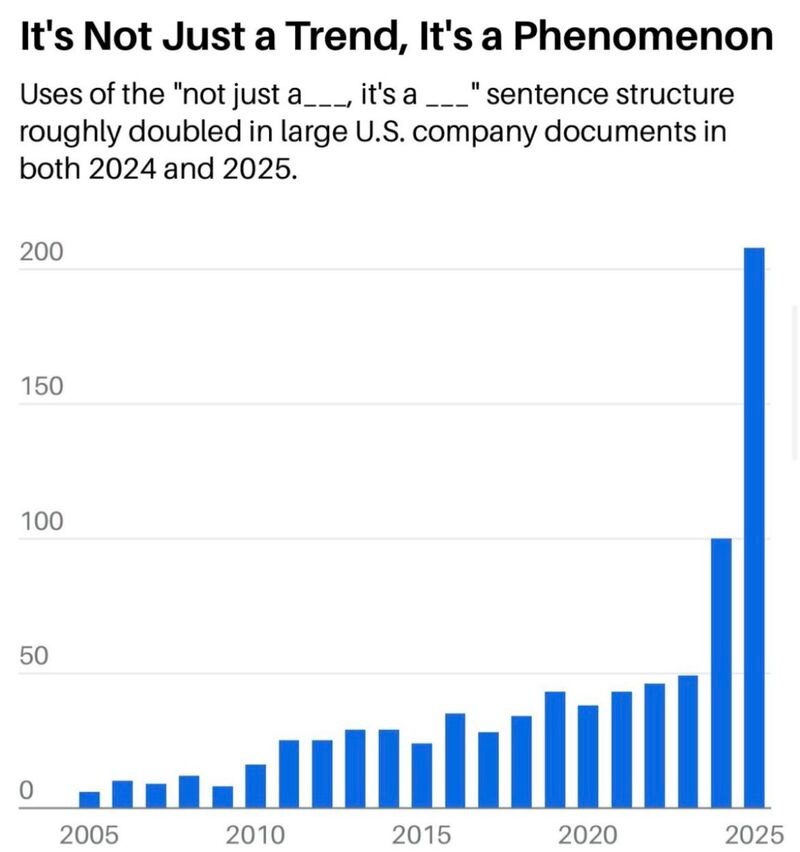
AI is supposed to save time, but the review it creates often takes longer than expected. Instead of proofreading, you are fact-checking, thinking about compliance, and rewriting the parts that sound robotic. (It’s not about X. It’s about Y.) By the time it is ready to publish, the time you saved is gone.
What to check before anything goes live
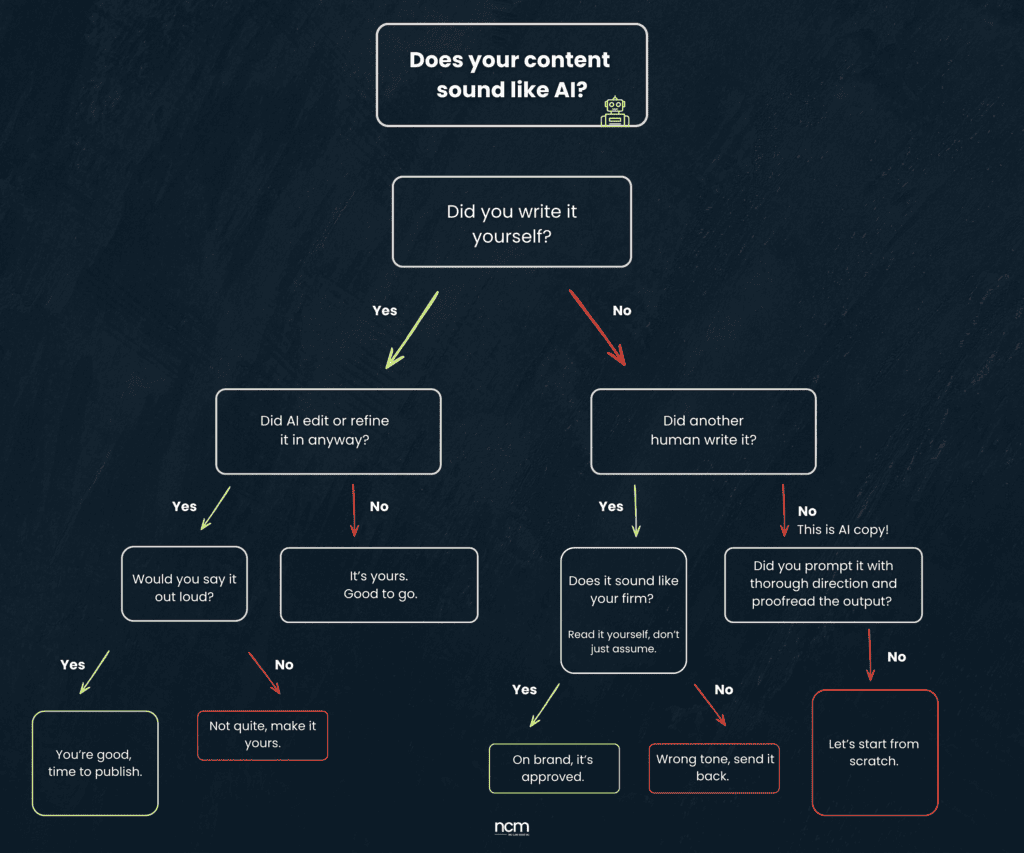
Even if you’ve fed your AI tool compliance no-nos, examples of your writing, and what feels like the perfect prompt, you still need to review every piece of content before it goes live. There is always something small enough to slip through the cracks.
Here are a few things that are worth checking every time.
- Compliance language. Read it like a regulator would, not like someone who already knows what it’s supposed to say.
- Any statistics or data need to be traced back to an original source. AI fabricates citations with a lot of confidence.
- ChatGPT in particular has developed a recent habit of introducing typos, odd spacing, and random indentations. Don’t just assume the output is clean just because it looks fine at a glance.
- Watch for stray symbols and special characters. These have a way of showing up uninvited.
The one that tends to catch people off guard is hidden text. When AI generates content, there is often code running behind it that carries copy you cannot see in a normal read-through. If you paste directly from an AI tool into your website, email platform, or document, that hidden content may come with it. Pasting into a plain text editor first strips it clean before it goes anywhere near your final format. It only takes ten seconds to save a potentially very embarrassing problem.
Generic output is everywhere, and audiences are catching on
When scrolling on social media, how many times do you catch yourself saying, “Oh great, more ChatGPT”? If you answered with “every time I log on to a platform,” you are definitely not alone. Your HNW prospects are saying the same thing.
What actually stops the scroll is not a market update or a generic tip. It is something that names a concern your prospect already has, ideally, next to a way to think about it:
- If you stopped working tomorrow, how long would your money last?
- Is the life you’re living now the one your plan was built for?
- How much longer does retirement planning stay on the back burner?
- You check your investment account every month. When did you last review the plan behind it?
Lines like these land because they speak to something real.

You rarely know in advance which post, blog, or newsletter will be the one that prompts someone to reach out, so the work is to keep showing up with writing worth reading. The catch is that this kind of content takes time, and time is exactly what sends advisors to AI in the first place.
Every AI model is working from the same script
You might think switching from ChatGPT to Claude or Gemini would give your content a different feel, but it doesn’t. Researchers at the University of Maryland and Google DeepMind analyzed over 61,000 stories generated across five major AI models and found that every single one clustered together in the same structural pattern, while human writing occupied its own distinct region entirely. As you can see, every AI model landed in nearly the same spot on the map, while the human writing occupied a completely separate region.
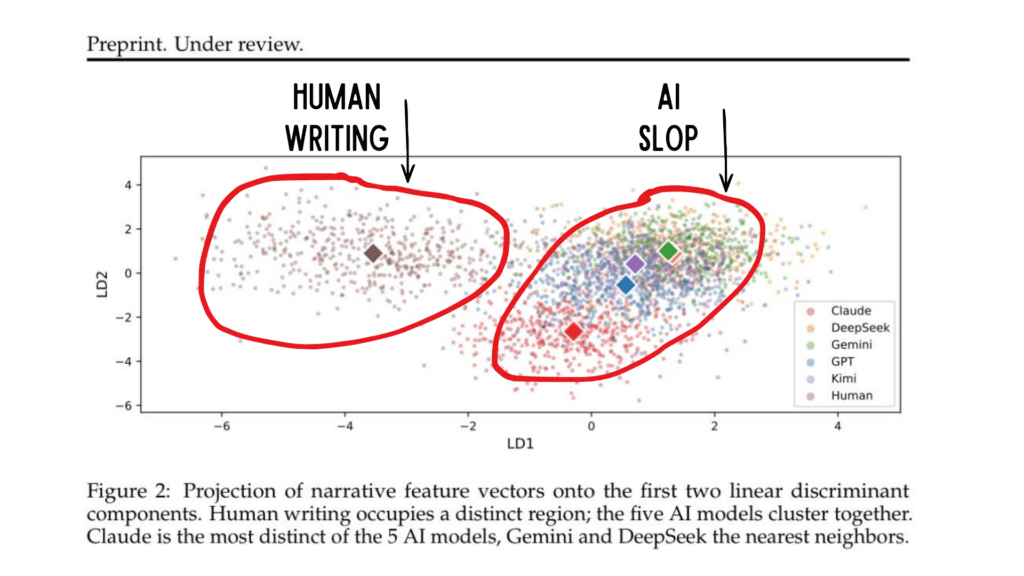
The study identified five specific ways AI writing gives itself away: it over-explains its themes instead of letting readers draw their own conclusions, it follows a more linear structure with fewer time-jumps or surprises, it leans heavily on physical descriptions to convey emotion, it rarely references specific brands or places the way humans naturally do, and it produces less varied narratives overall. HNW prospects read a lot of financial content, and they recognize templated content when they see it. So, the tool you use doesn’t change the output as much as you’d like. What changes the output is a human who knows what they want to say and how they want to say it, while using AI as a starting point instead of the final say.
AI isn’t leaving, so just be sure to use it correctly
It’s probably safe to say, at least for now, that AI isn’t going anywhere. It’s going to be all over your LinkedIn feed, and in ads, and in presentations, and… you get the picture.
The problem is that AI-generated content tends to sound like everyone else’s, and your clients and prospects notice that. All of that takes human judgment, and the firms that understand that are the ones that people remember.
For the record, we use AI too. Used well, it is excellent for brainstorming, drafting, and repurposing something you have already written. It is a starting point, not a finished product, and your audience can tell the difference.
Related: Do You Market Your Firm the Same Way You Advise Clients To Invest?